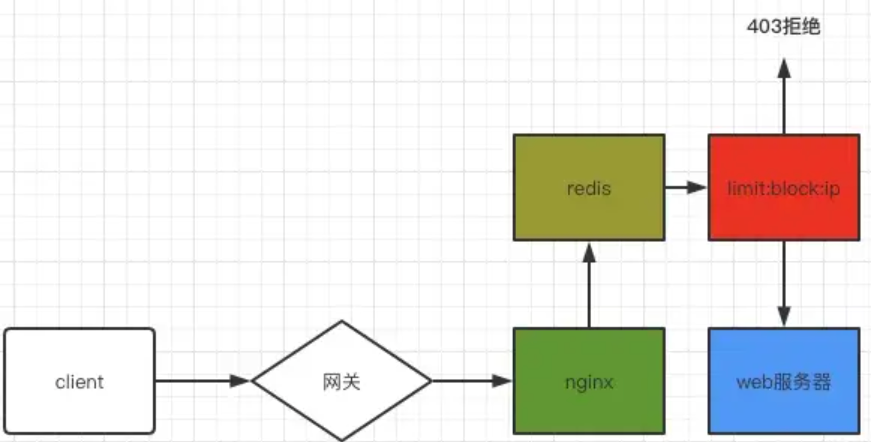
/usr/local/lua/access_limit.lua
-- 可以实现自动将访问频次过高的IP地址加入黑名单封禁一段时间
--连接池超时回收毫秒
local pool_max_idle_time =10000--连接池大小
local pool_size =100--redis 连接超时时间
local redis_connection_timeout =100--redis host
local redis_host ="your redis host ip"--redis port
local redis_port ="your redis port"--redis auth
local redis_auth ="your redis authpassword";--封禁IP时间(秒)
local ip_block_time=120--指定ip访问频率时间段(秒)
local ip_time_out =1--指定ip访问频率计数最大值(次)
local ip_max_count =3-- 错误日志记录
localfunction errlog(msg, ex)
ngx.log(ngx.ERR, msg, ex)
end
-- 释放连接池
localfunction close_redis(red)if not red then
return
end
local ok, err = red:set_keepalive(pool_max_idle_time, pool_size)if not ok then
ngx.say("redis connct err:",err)returnred:close()
end
end
--连接redis
local redis = require "resty.redis"
local client = redis:new()
local ok, err = client:connect(redis_host, redis_port)-- 连接失败返回服务器错误
if not ok then
close_redis(client)
ngx.exit(ngx.HTTP_INTERNAL_SERVER_ERROR)
end
--设置超时时间
client:set_timeout(redis_connection_timeout)-- 优化验证密码操作 代表连接在连接池使用的次数,如果为0代表未使用,不为0代表复用 在只有为0时才进行密码校验
local connCount, err = client:get_reused_times()-- 新建连接,需要认证密码
if0== connCount then
local ok, err = client:auth(redis_auth)if not ok then
errlog("failed to auth: ", err)return
end
--从连接池中获取连接,无需再次认证密码
elseif err then
errlog("failed to get reused times: ", err)return
end
-- 获取请求ip
localfunction getIp()
local clientIP = ngx.req.get_headers()["X-Real-IP"]if clientIP == nil then
clientIP = ngx.req.get_headers()["x_forwarded_for"]
end
if clientIP == nil then
clientIP = ngx.var.remote_addr
end
return clientIP
end
local cliendIp =getIp();
local incrKey ="limit:count:"..cliendIp
local blockKey ="limit:block:"..cliendIp
--查询ip是否被禁止访问,如果存在则返回403错误代码
local is_block,err = client:get(blockKey)iftonumber(is_block)==1 then
ngx.exit(ngx.HTTP_FORBIDDEN)close_redis(client)
end
local ip_count, err = client:incr(incrKey)iftonumber(ip_count)==1 then
client:expire(incrKey,ip_time_out)
end
--如果超过单位时间限制的访问次数,则添加限制访问标识,限制时间为ip_block_time
iftonumber(ip_count)>tonumber(ip_max_count) then
client:set(blockKey,1)client:expire(blockKey,ip_block_time)
end
close_redis(client)
总结
以上,便是 Nginx+Lua+Redis 实现的 IP 黑名单功能,具有如下优点:
配置简单轻量,对服务器性能影响小。
多台服务器可以通过共享 Redis 实例共享黑名单。
动态配置,可以手工或者通过某种自动化的方式设置 Redis 中的黑名单
扩展
1、IP 黑名单的应用场景
IP 黑名单在实际应用中具有广泛的应用场景,主要用于保护服务器和应用免受恶意攻击、爬虫或滥用行为的影响。下面列举几个常见的应用场景:
防止恶意访问: 黑名单可以阻止那些试图通过暴力破解密码、SQL 注入、XSS 攻击等方式进行非法访问的 IP 地址。






 400 186 1886